
Clinton Township City Directory Collections
Clinton Township historical research is spread across several custodians, not one complete shelf of household books. The Donald W. Green Local History Room at the Clinton-Macomb Public Library is the practical local starting point. The Mount Clemens Public Library has the most specific verified directory index, while county, state, and archive collections supply maps, newspapers, and related evidence. Use the collection’s stated scope before treating an entry as a township-wide result. A county-seat volume can include nearby places, yet it may not cover every Clinton Township street.
| Collection | Years | Where Held | Access |
|---|---|---|---|
| Mount Clemens City Directory Master Index | 1896-1966 | Mount Clemens Public Library | Ask staff for the indexed volume and page |
| Macomb County government directories | 1947-48 to 2023-24, with gaps | Macomb County archive | Downloadable PDFs |
| Donald W. Green Local History Room | Local reference holdings, exact private-directory runs not published online | CMPL main branch | Reference-desk access during library hours |
| Federal census and supporting local indexes | 1950 is the latest released federal census | Library, National Archives, and FamilySearch | Check collection-specific access and coverage |
Exact private-household publisher and year runs for Clinton Township are not published on the CMPL web page. That is a reason to ask for the shelves, not a reason to assume a run exists. The Mount Clemens index is a name index to city directories, not a promise that each Clinton Township address is in every volume. The county series is useful for public offices, courts, organizations, parks, and institutional continuity, but it is not a complete household roll.
The Macomb County Heritage Alliance description of CMPL’s local-history room shows the setting for this local research.
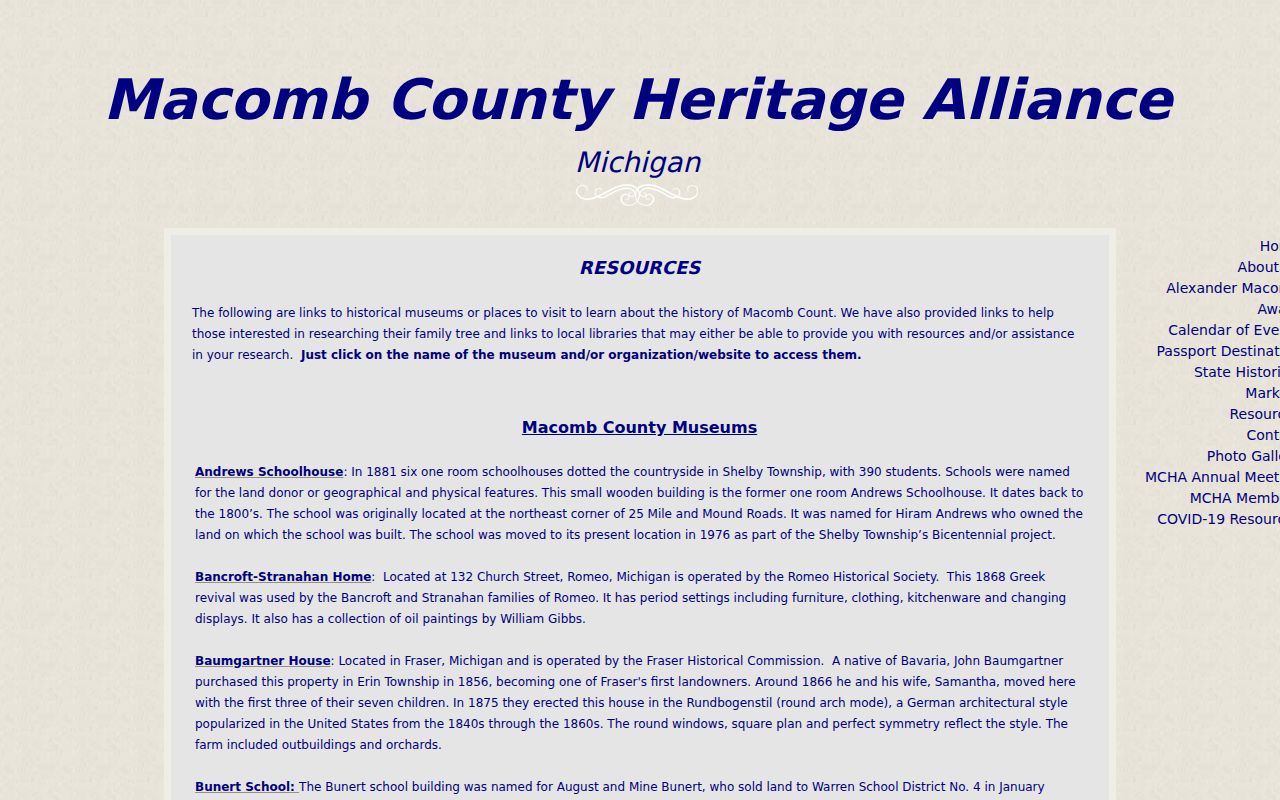
Use the reference desk to locate the current directory, newspaper, obituary, census, yearbook, and map materials rather than relying on an incomplete online shelf list.
Clinton Township City Directory Shelf at CMPL
The Donald W. Green Local History Room is on the second floor of CMPL’s main branch at 4090 Romeo Plank Road. The Heritage Alliance describes more than 2,000 volumes, local maps, the complete Pioneer History collection, Michigan History Magazine, the 1928 Pageant of Progress, photographs, and video and DVD material. It is open during regular library hours, with a pass key from the reference librarian. These holdings make it a strong first stop when a Clinton Township city directory search needs a map, local history file, or another source beside a name listing.
CMPL serves most township residents. The portion of Clinton Township in the Mount Clemens School District is outside its service area, which is one reason the nearby Mount Clemens library is an important companion. Confirm whether a database is available on site or remotely before planning a visit. A record of a shelf location, volume year, page, and street spelling makes later checking much easier.
Note: The library’s web catalog does not publish a full private-directory shelf list, so verify the specific volume with a reference librarian.
Mount Clemens Index for Clinton Township City Directories
The Mount Clemens Public Library indexes identify the Mount Clemens City Directory Master Index for 1896 through 1966. It can point to a surname, address, household clue, or published affiliation in a county-seat or nearby-area directory. It is especially useful where a family moved between Clinton Township and Mount Clemens, but each actual volume must still be checked for geographic scope. A hit is a lead to inspect, not proof that a modern township boundary applied at the time.
The same library lists a Macomb County Obituary Index from 1941 forward with older content, a probate index, a 1930 census index, a high-school yearbook master name index from 1917 forward, World War I service indexes, an 1890 Special Veterans Census index, and a 1928 Pageant of Progress index. These records can confirm a name, family relationship, date, or community connection after a directory entry is found.
The official index page is the source shown here.
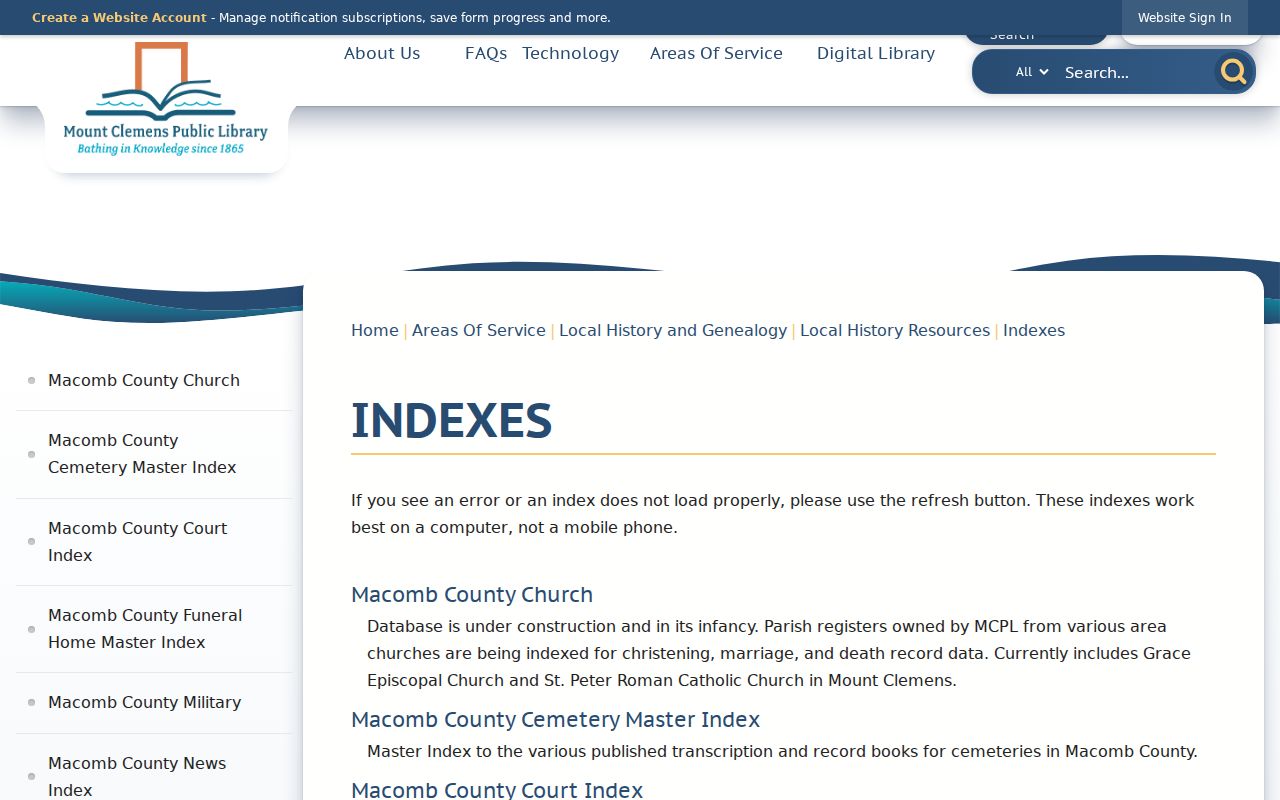
Request the linked volume or page, then compare its street section with the alphabetical entry before drawing conclusions about a household.
Macomb County Directories Around Clinton Township
The Macomb County Directories archive is a distinct source with an institutional purpose. Its PDFs run from 1947-48 through 2023-24, with listed editions across the intervening decades. The archive also records that no directory was printed in 1980, 1981, or 1983. These volumes identify departments, elected officials, courts, organizations, communities, parks, and concise county history. They can establish the public setting of a year, but they should not be read as an every-address city directory.
For family history, the county series works best alongside a household-oriented directory or an index. It can explain which office or organization existed in a particular period, then a newspaper, obituary, deed, census, or library volume can test a surname and address. The named no-directory years are a useful reminder that publication gaps are part of the record trail.
The county’s directory archive displays the downloadable series and its gaps.
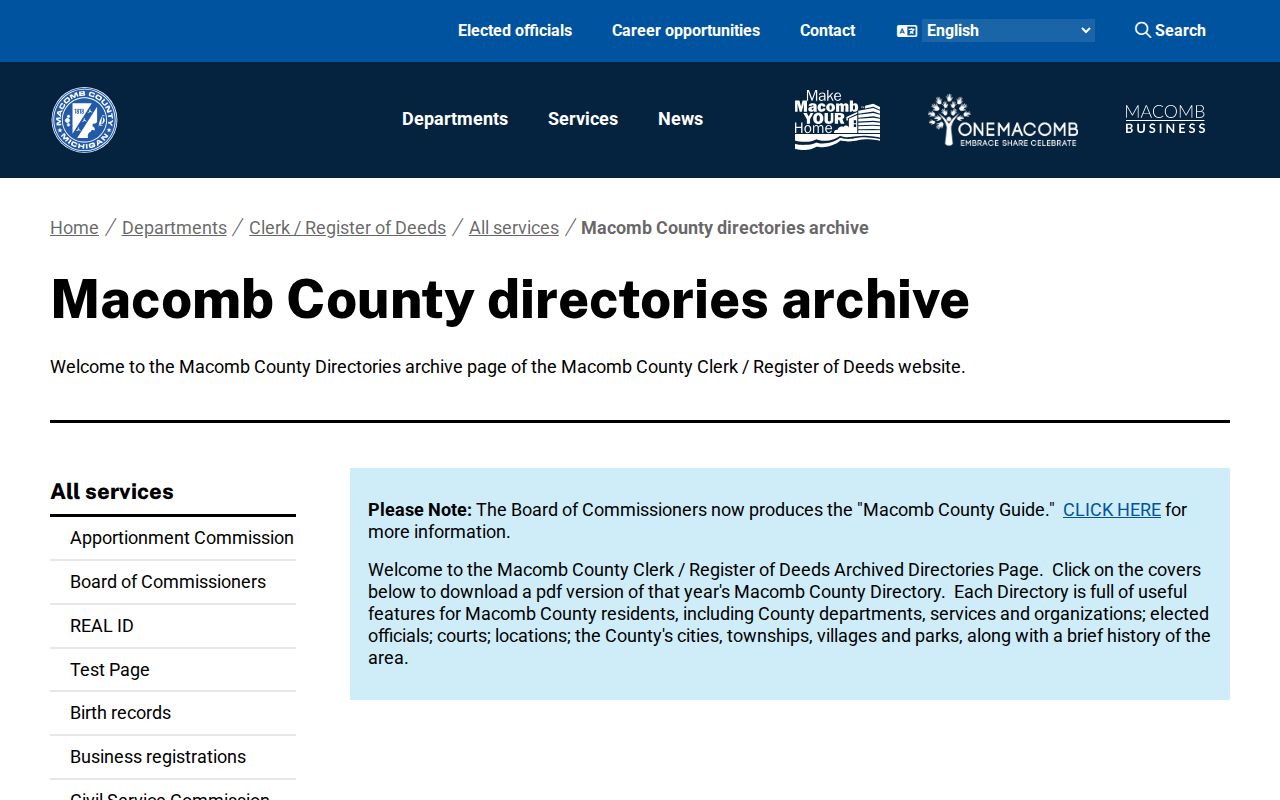
Use an archive edition to anchor public institutions in time, then return to the local-history shelves for household-level evidence.
The documented milestones also show where the local record trail changes shape.
- 1782: New Gnadenhutten is established on land now within Clinton Township.
- 1896: The Mount Clemens City Directory Master Index begins.
- 1947-48: The verified Macomb County government-directory series begins.
- 1980, 1981, and 1983: The county archive identifies years with no directory printed.
- 2023-24: The most recent county government directory listed in the archive is available.
Digital Context for Clinton Township City Directory Research
Libraries and archives add material that explains a name or address when no directory image is online. The Library of Michigan Macomb guide identifies county newspapers, atlases, cemetery materials, naturalization-related titles, and local-record resources. It lists The Macomb Daily on microfilm for 1964-2019 and selected area newspapers, including South Macomb News for 1932-1964. Record the newspaper title and page whenever a notice is used, because an index snippet alone is not a complete source.
Library cardholders can check the Library of Michigan online resources for Ancestry Library Edition on site, Fold3 Library Edition, Michigan Digital Sanborn Maps, and FamilySearch. The Macomb guide also identifies an 1875 combination atlas, a 1916 Standard Atlas, a 1956 Farm Plat Book, a 1928 Soil Survey, and a 1961 census of people ages zero through nineteen in Macomb County communities. Access and coverage should be confirmed in the live service.
The Library of Michigan county guide gives the broader Macomb research context.
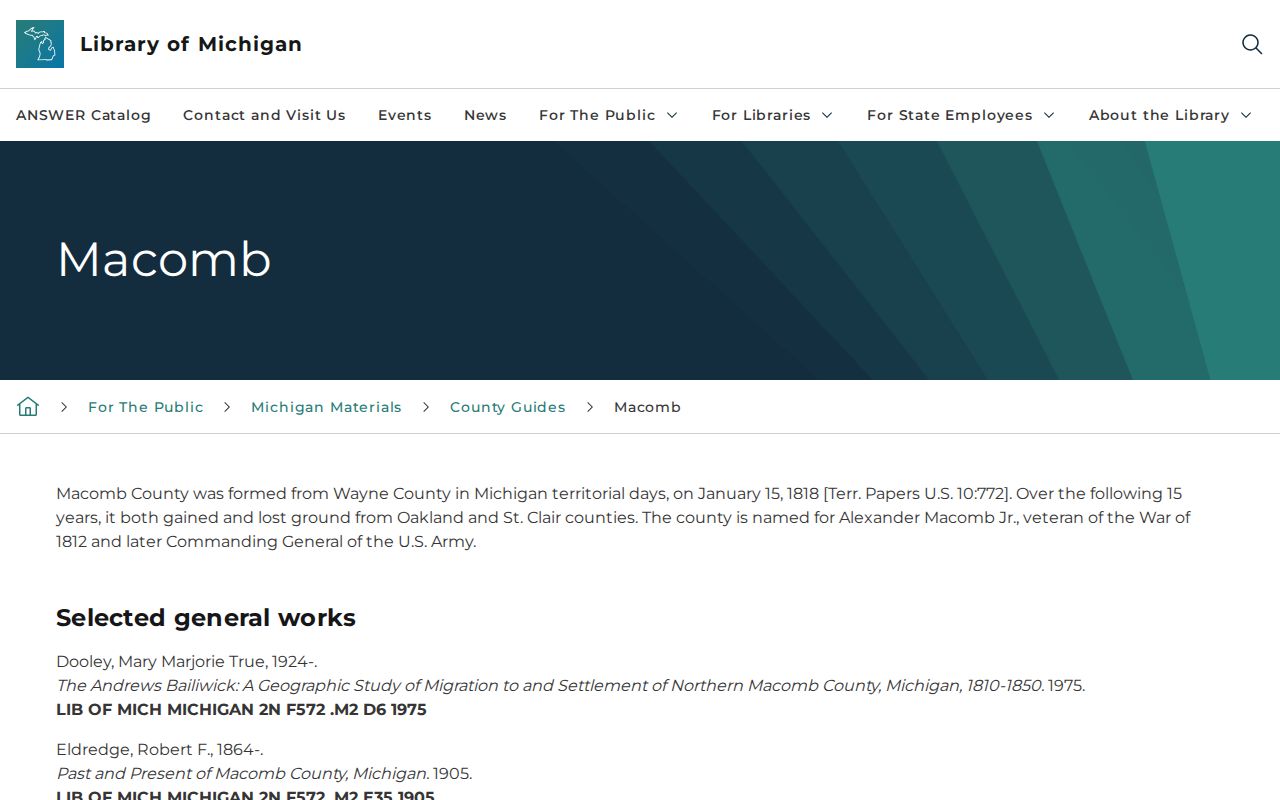
These tools explain local geography and historical context, while the directory volume remains the source for what it actually printed.
The online-resources page describes several database routes.

Check the current access terms before counting on a database from home, since some services are available only inside a library.
Clinton Township City Directory and Old Localities
Names can misdirect a historical search. The Clinton Public Library Digital Archives at the source below belongs to a different Clinton Public Library, not the Clinton-Macomb Public Library system serving Michigan’s Clinton Township. It should not be cited as a Clinton Township collection. For township and Macomb County material, use CMPL, Mount Clemens Public Library, the Library of Michigan, the Archives of Michigan, and the relevant newspaper or county archive instead.
The correction matters because a familiar library name and a plausible-looking digitized newspaper can create a false local match. Check the holding institution, city, county, and geographic scope before recording a result. For early township research, also try locality names such as Frederick, Cady’s Corner, Quinn, Mount Clemens, or the larger historic Huron and Clinton township geography. New Gnadenhutten, a Moravian settlement established in 1782, was later known as Casino and by 1818 as the Village of Frederick. Its later sawmill fire and disappearance from the modern map make historic place names especially valuable.
The similarly named Clinton Public Library collections page illustrates the source that must not be treated as a Clinton Township holding.
Use the location of the custodian, not the shared word “Clinton,” to decide whether a collection belongs in a Clinton Township research trail.
Read a Clinton Township City Directory Entry
A directory entry must be read as a compact published description, not a modern identity record. The verified local inventory supports looking for the alphabetical headword, printed address, household notation, telephone details in later books, a business listing, and a reverse street section where the volume includes one. Older volumes may abbreviate a street or use a route or rural descriptor. A name can be absent because of a move, death, marriage, military service, a missed canvass, or the boundaries used by that publisher.
| Alphabetical headword | Surname followed by given name or initials. |
|---|---|
| Address | Street number and name, sometimes abbreviated or expressed as a route. |
| Household mark | A spouse in parentheses, widow notation, or another family name where the volume uses one. |
| Residence notation | A printed status marker where the publisher included one; confirm its meaning in the volume key. |
| Reverse and business sections | Street order may identify an address-to-subscriber lead; a business section can list a proprietor, address, and telephone. |
- Criss-cross directory
- The address-ordered half of a directory. It can move from a historic street address to a printed occupant or subscriber.
- Householder index
- An alphabetical arrangement centered on a household name instead of a street address.
- Abbreviation key
- The volume’s explanation of its shortened marks. Copy it before interpreting any residence or household notation.
Record the exact year and page with each finding. A telephone subscriber or printed household marker does not establish every person at that address, and a city-directory spelling should be checked against the original page before it is reused elsewhere.
Trace a Clinton Township City Directory Name
Use a city directory as one point in a dated household trail. Begin with the street or alphabetical entry closest to the period already known, then compare the same surname in the next available volume on each side. Pair a directory year with the nearest released federal census year, especially the 1900 through 1950 schedules, and compare relationships, ages, and enumeration geography. A map or plat may explain why an address appears under an older locality name rather than a current Clinton Township label.
- Find the surname or address in the indexed volume, and copy the year, page, street spelling, and every printed household clue.
- Check the next available directory years in both directions, noting a move, name variant, or change in household notation.
- Use the criss-cross or street section, when present, to test whether the address points to the same printed household.
- Pair the dated entry with the nearest census, then compare it with an obituary, marriage record, probate index, deed, or map as appropriate.
- When a result disappears, search old locality labels and nearby Mount Clemens material before deciding the trail ended.
Maps are useful for structure and address continuity but do not identify ordinary occupants. The Library of Congress’ nearby Mount Clemens Sanborn collection contains a December 1909 set of sixteen sheets, while the Library of Michigan reports Michigan Digital Sanborn coverage from 1867 to 1970. For a backward address trail, the collection details belong with the Clinton Township previous residents records, where deeds and parcel descriptions carry the address through time.