
Clinton Township Neighbors by Parcel
Public records about a block work best as a parcel-by-parcel check. The map can establish which lots touch the subject parcel. The tax card can identify an owner and a separate mailing address. A deed index explains a transfer, while a library collection may place a past household at an address. None of those sources is a live household roster. Keep the record type and its date beside every name, especially where an owner, tax correspondent, or historic directory entry is being compared.
| Block Source | What It Can Show | How to Reach It |
|---|---|---|
| Macomb GIS Parcel Explorer | Parcel boundaries, adjacent lots, plats, ZIP, school, flood, and aerial layers | Free map search, parcel click, layers, and print tools |
| Clinton Township BS&A | Owner, situs, mailing address, parcel data, values, taxes, and sales information | Township-linked property search |
| Macomb Register of Deeds | Grantor, grantee, document date, and legal description | Online index, counter terminal, staff or mail request |
| Michigan Voter Information Center | Election details for a verified person | Identity-gated lookup or election-office request |
| Library and community materials | Historic address entries, event programs, photographs, or local context | Library, archive, or organization request |
For the question “who owns the lot next door,” the parcel card and deed chain are the strong records. For a question about the history of a street or past household, the local-history shelf is more useful. A map selection never proves present-day occupancy, and a mailing address may be an agent, trust, or other correspondence route.
| Official record route | Commercial neighbor-search category |
|---|---|
| Names the custodian, record date, and limited purpose of the parcel, deed, court, or election record. | May combine old and current data without showing a reliable source date or record boundary. |
| Supports correction requests and a direct copy request from the office holding the record. | Can merge same-name people or repeat stale addresses, so it is not a substitute for custodian verification. |
Mapping Clinton Township Neighbors Nearby
The verified block method starts at Macomb County's Parcel Explorer. Choose Parcels Experience, search by address or parcel number, then select the subject lot. The viewer supports boundary and dimension layers, subdivision plats, current and historical aerials, ZIP and school layers, flood information, measurements, and a tax-data link. The guide does not document a named radius or neighbor button. Adjacent parcels are therefore found by clicking the lots that share a boundary or by browsing the same street at the same zoom.
- Find the exact situs address or parcel number and open the selected parcel.
- Turn on parcel boundaries, then click each touching lot and record its parcel identifier and map context.
- Open the connected tax data or the township property search to compare owner, situs, mailing, and legal-description fields.
- Use the Register of Deeds when a transfer date or earlier owner needs confirmation, and preserve the date of every record used.
Aerial imagery provides development context, not a legal boundary. The county says those images are general reference and may not align precisely with property lines. For a whole named street rather than the immediate block, the Clinton Township street directory follows the longer address-record chain.
Clinton Township Block Map Layers
Map layers can answer place questions without trying to identify people. Parcel dimensions and subdivision plats help relate an address to lot and block. The ZIP layer helps explain postal geography, while school, flood, natural-feature, and aerial layers add civic context. Measure and markup tools can create a rough block worksheet, and the print control preserves the map view and date used for a comparison.
Clinton Township's three standard residential ZIPs are 48035, 48036, and 48038, but postal geography does not define the township line. Its irregular boundary sits near Mount Clemens, Fraser, Sterling Heights, Roseville, St. Clair Shores, Harrison Township, and Macomb Township. Confirm a subject address through its situs parcel and USPS rather than inferring jurisdiction from a ZIP label. The map is useful for context, not for stating that everyone within a polygon is a neighbor.
Note: Save the parcel number and map date with any block notes, because layer displays and ownership data can change after a transfer or correction.
Clinton Township Voter Record Limits
Michigan does not offer an ordinary public block-by-block voter directory. The Michigan Voter Information Center requires first name, last name, birth month, birth year, and ZIP for its name route. Its alternate identity route requires a driver-license or state-ID number plus residential address. The result serves the person who passes that check and can show registration, precinct, polling place, ballot, clerk, and related election information. It cannot be used to infer a list for neighboring parcels.
A lawful voter-file request is separate from the public self-service form. Contact the Michigan Bureau of Elections or Macomb County Election Department with a defined jurisdiction, fields, format, date, and lawful purpose. Sensitive identifiers, signatures, full birth information, and protected addresses are not normal public fields. The 2026 state update on voter-roll maintenance also makes the distinction clear: self-lookup and a controlled public-record request are different access paths.
The Michigan voter-roll update describes the current state context for those limits.
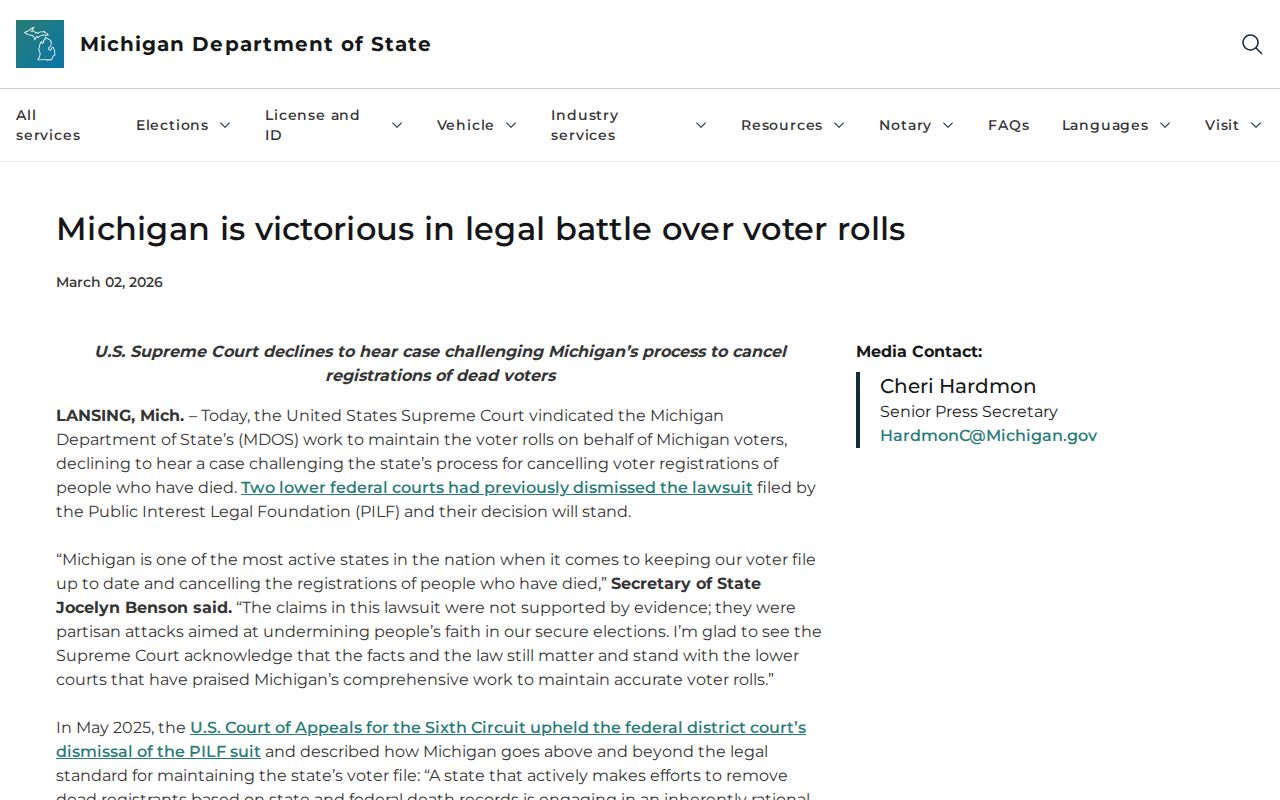
Use election information to check a verified person's own record or to contact the appropriate election office, not to build a neighbor list.
Community Leads for Clinton Township Neighbors
Community resources offer a different kind of block information. The Township's community material points to civic resources, history programming, parks, and current initiatives. The Clinton Township Historical Commission maintains history programming and a Historical Village at the Civic Center. Its meetings are associated with the Clinton-Macomb Public Library Local History Room. Local organizations may hold newsletters, memorial material, photographs, or event programs, but ordinary membership lists should be requested from the group rather than treated as public records.
Clinton Township Historical Commission
History programming, local-history activity, and Historical Village context. Public board packets can identify commission members and project participants.
Clinton-Macomb Public Library
The Donald W. Green Local History Room holds local volumes, maps, photographs, and media that can support an address or community-history question.
Local civic groups
Goodfellows, Kiwanis, the Area Optimist Club, and the Mount Clemens/Clinton Township Rotary may be contacted for access to their own historical material.
The Township community source is the starting point for this civic layer.
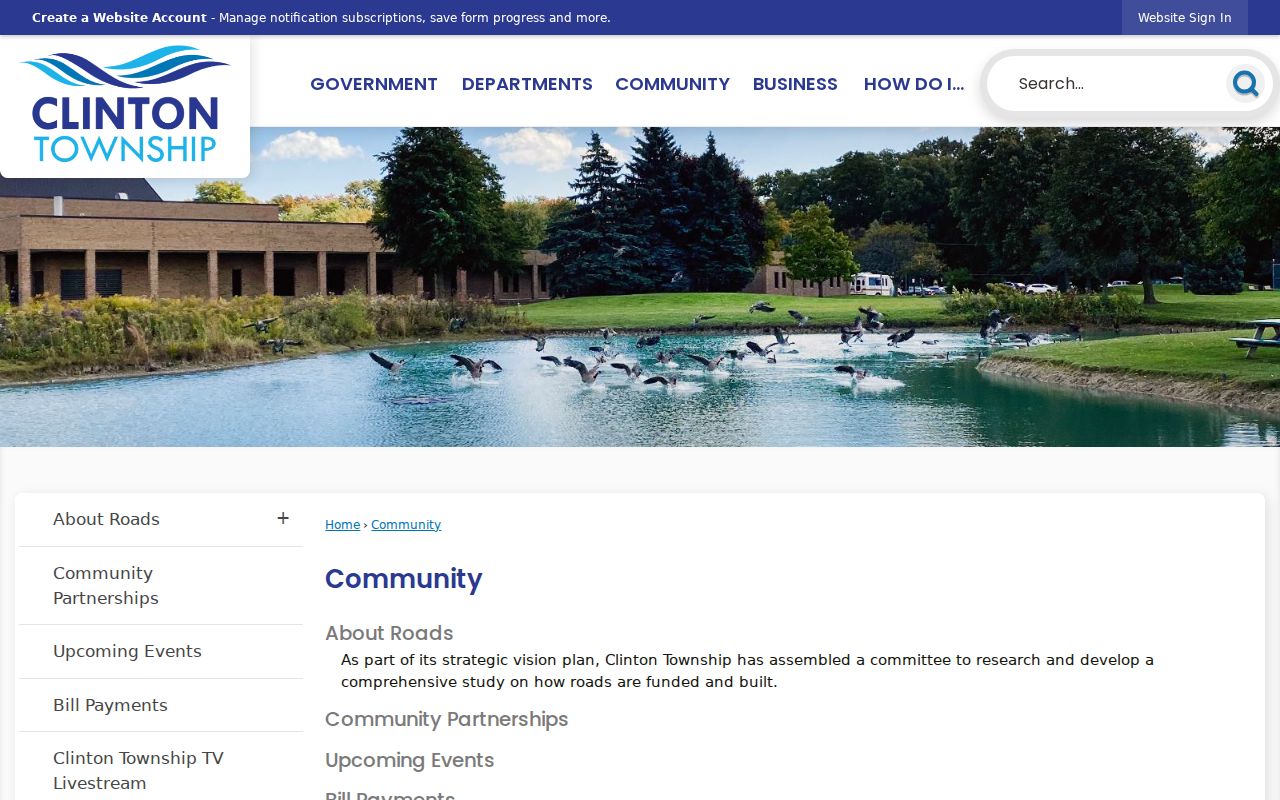
Community material can explain a block's shared history or civic ties, but it should not be treated as a public household directory.
Clinton Township Project Map Context
The July 2026 Construction Projects Dashboard adds a current place layer for roads, water, sewer, parks, and pathways. It is a transparency resource that the Township says will be updated as data becomes available. A road or water project can explain why a map, permit, or address question is timely, yet the dashboard is not a resident database and does not identify neighbors.
For a block worksheet, combine that project context with the parcel boundaries and the recorded map date. If the question concerns a permit or inspection, use the exact address and date range with the Township Building Department or a written records request. This avoids treating a construction project, contractor name, or application as proof about a household. Recheck the dashboard when dates matter, because the Township updates it as information becomes available.
Clinton Township Neighbors Need Context
Official specialty tools can be useful for narrow public-safety or family questions, but they are not block directories. Macomb County's Sheriff links the public to its custody lookup and warns that the office will not call to demand fees, gift cards, cryptocurrency, or other payment. Confirm a claimed custody issue with the Sheriff's published contact rather than a caller. A booking or registry result is also not a complete account of a person.
The Macomb Sheriff inmate-lookup page carries that fee-scam warning.
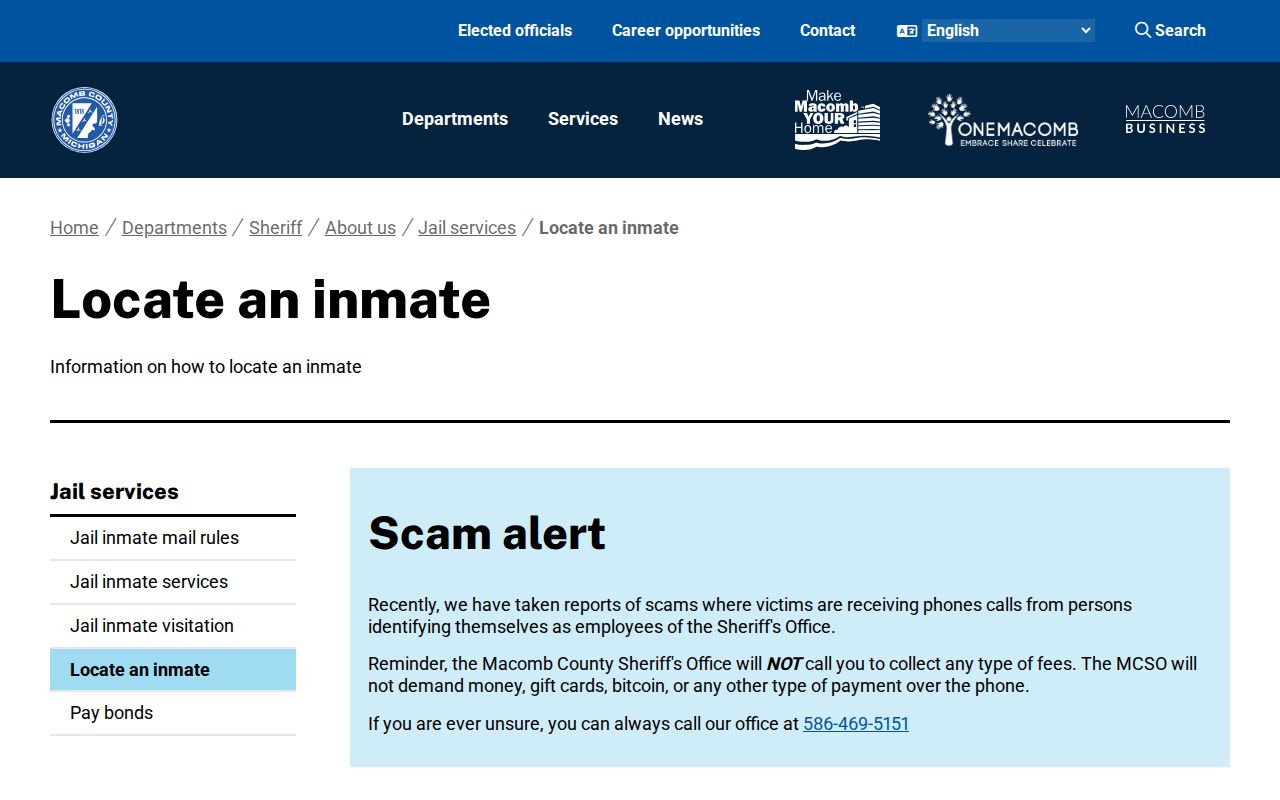
Use the published office route for a focused custody question and keep the result in its stated legal and date context.
Michigan Treasury's free unclaimed-property search is another name-based tool with a narrow use: a person may search current, maiden, former, business, or nonprofit names, and heirs may be eligible claimants. It can support an estate question, but it cannot confirm a residence or define a block.
The Treasury notice explains that the search and claim process are free.
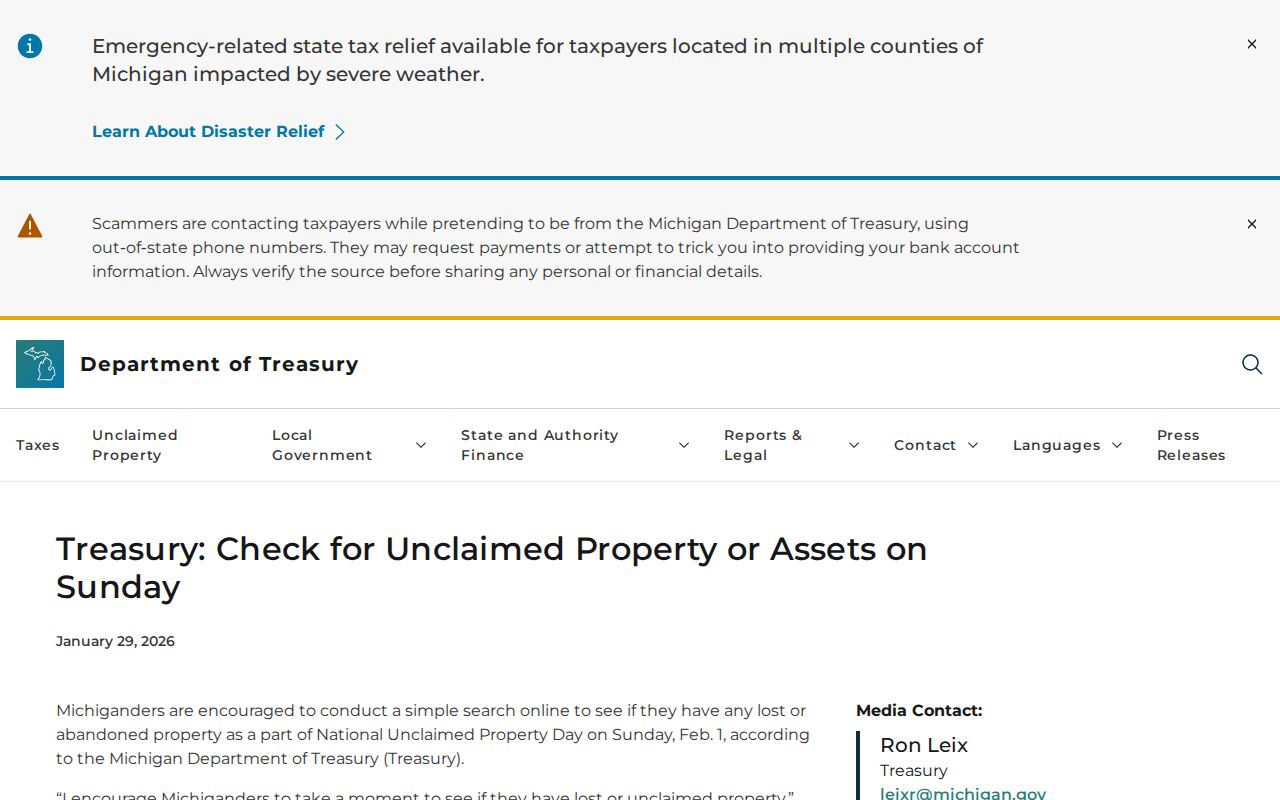
A name match in an unclaimed-property database needs claim proof and does not show where the person lives.
Privacy Limits for Clinton Township Neighbors
Public parcel records identify land interests, not every private household connection. Information from utilities, deliveries, motor-vehicle records, protected voter fields, adoption files, and many court matters is not a normal address-search result. Michigan's Address Confidentiality Program can provide an eligible participant with a designated substitute address and mail forwarding. A different or missing address may be a lawful privacy measure, not an error to work around.
Michigan's Attorney General explains the program's eligibility and application-assistant path for people at risk of harm. When a public record appears inaccurate, ask the original custodian about correction or statutory redaction rather than copying or republishing sensitive material. The process is record-specific, and a private service cannot remove the original public record held by a government office.
The Michigan Address Confidentiality Program source explains substitute-address protections.
Respect protected addresses and private household details even when nearby parcel information is easy to find.
Lawful use. Use Clinton Township neighbor records for personal, lawful research, local history, civic questions, or reconnecting. Do not use information from a block search to stalk, harass, threaten, or harm anyone.